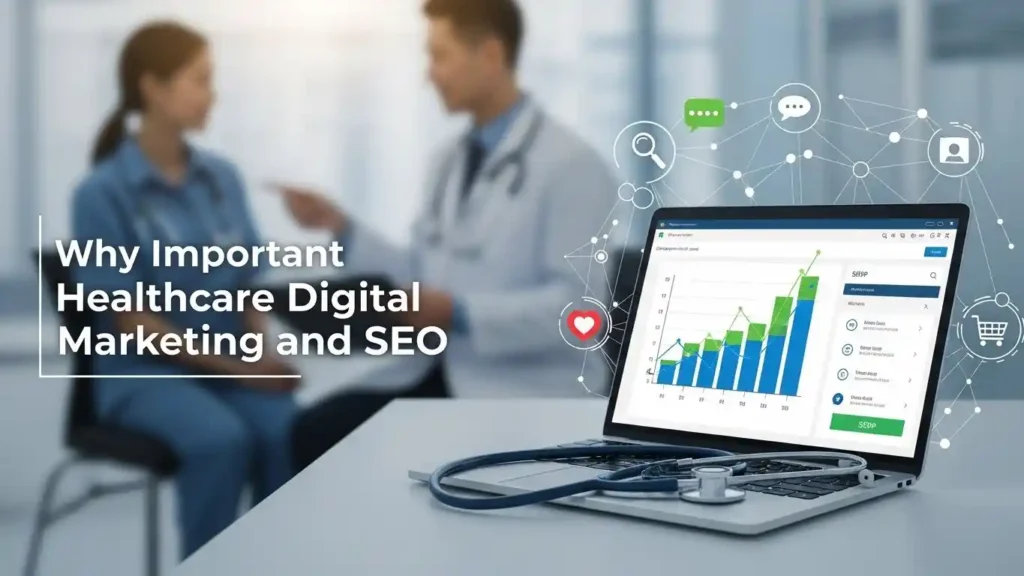

What Is Healthcare Marketing
Healthcare marketing is the strategic communication of healthcare services, values, and expertise to patients and communities. It includes digital marketing, branding, content, SEO, social media, email communication, reputation management, and patient engagement efforts.
Unlike traditional marketing, healthcare marketing must be ethical, compliant, and patient focused. The goal is not to push services aggressively, but to guide, educate, and support people at every stage of their healthcare journey.
Why Healthcare Marketing Is More Important Than Ever
Patients Are Searching Online First
Most Americans use search engines to find healthcare providers. Whether they are looking for a primary care physician, a specialist, or urgent care, the first step is usually Google.
If your practice or hospital does not appear in search results, potential patients may never know you exist. Healthcare marketing ensures visibility through SEO, local search optimization, and content that answers real patient questions.
Being present online is no longer optional. It is expected.
Benefits of Healthcare Marketing for Patients
Healthcare marketing is not just good for providers. It benefits patients directly.
Better Access to Information
Patients can learn about symptoms, treatments, and prevention before visiting a provider. This leads to better conversations and more informed decisions.
Easier Access to Care
Marketing improves discoverability, appointment scheduling, and communication. Patients find care faster and with less frustration.
Increased Trust and Transparency
Clear messaging and educational content help patients feel confident and respected.
Benefits of Healthcare Marketing for Providers
Practice Growth
Marketing drives patient acquisition in a predictable and scalable way. It reduces reliance on referrals alone.
Stronger Brand Reputation
Consistent messaging builds recognition and trust within the community.
Competitive Advantage
Providers who invest in marketing stand out in crowded markets and adapt faster to patient behavior changes.
Better Patient Engagement
Engaged patients are more compliant, more satisfied, and more likely to stay long term.
Digital Marketing Channels That Matter Most in Healthcare
Search Engine Optimization
SEO ensures that your organization appears when patients search for care. Local SEO is especially important for clinics and practices.
Content Marketing
Blogs, videos, and guides answer patient questions and support every stage of the funnel.
Online Reviews and Reputation Management
Reviews influence decisions heavily in healthcare. Managing and responding to feedback builds credibility.
Social Media
Social platforms humanize providers and create ongoing engagement with the community.
Email Marketing
Email supports follow ups, education, and long term relationships.
Compliance and Ethics in Healthcare Marketing
Healthcare marketing must always respect privacy, accuracy, and regulations. Trust is fragile in healthcare.
Effective marketing balances promotion with responsibility. It educates without misleading and promotes without exploiting fear.
Ethical marketing builds long term trust, which is far more valuable than short term clicks.
The Future of Healthcare Marketing
Healthcare marketing will continue to evolve as technology and patient expectations change.
Personalization, data driven strategies, telehealth integration, and patient experience optimization will play a larger role.
However, the core principle will remain the same. Helping people find the right care at the right time.
Conclusion
Healthcare marketing is important in the digital age because patients have changed. They search online, compare options, and form trust before ever contacting a provider.
Marketing connects healthcare organizations with the people who need them most. It educates, reassures, and guides patients through complex decisions.
When done correctly, healthcare marketing is not about selling care. It is about making care accessible, understandable, and trustworthy.
In today’s healthcare environment, marketing is not an add on. It is a vital part of delivering better patient experiences and building sustainable healthcare organizations.