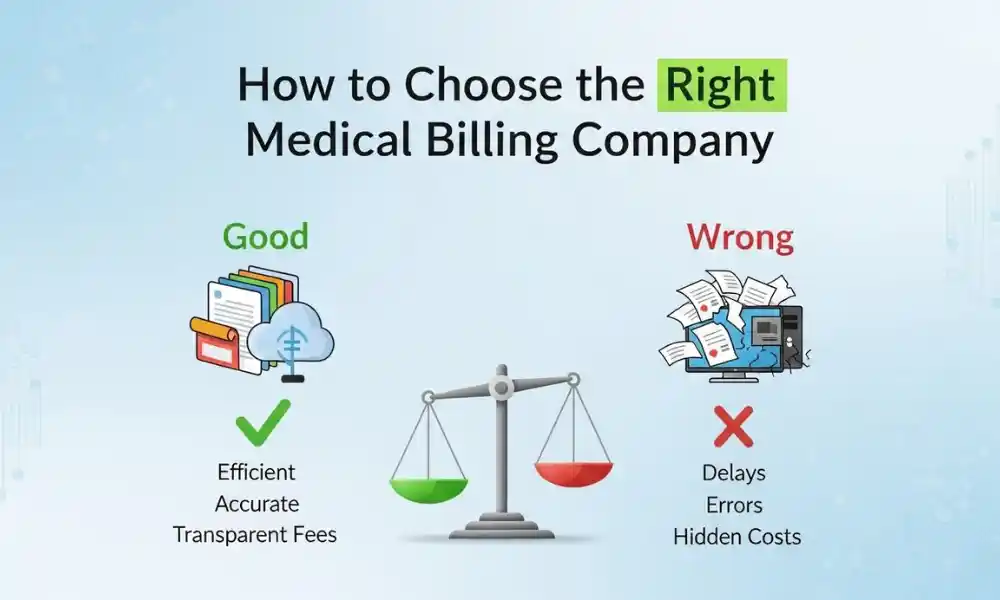

Choosing the right medical billing company in 2026 is no longer just about outsourcing claims processing. It is about protecting revenue, maintaining compliance, leveraging technology, and building a reliable long-term partnership.
With evolving payer policies, AI-driven audits, value-based care models, and stricter data security requirements, selecting the wrong billing partner can result in delayed payments, compliance risks, and lost revenue.
This guide explains how healthcare providers can evaluate and choose the right medical billing company in 2026 using practical, experience-based criteria.
Why Choosing the Right Medical Billing Company Matters
Medical billing directly affects the financial health of a practice. A reliable billing partner helps improve:
- Cash flow and collections
- Claim acceptance rates
- Revenue cycle efficiency
- Regulatory compliance
- Patient billing accuracy
In 2026, many insurance payers use automated systems to flag errors and inconsistencies. Accurate coding, proper documentation, and proactive denial management are essential to avoid payment delays.
What Does a Medical Billing Company Do?
A medical billing company manages the end-to-end revenue cycle, including:
- Patient eligibility and insurance verification
- Medical coding (ICD-10, CPT, HCPCS)
- Claim submission and tracking
- Denial management and appeals
- Payment posting and reconciliation
- Accounts receivable (AR) follow-ups
- Patient statements and billing support
Many modern billing companies also offer analytics, reporting dashboards, and EHR integration.
Key Factors to Consider When Choosing a Medical Billing Company
1. Experience in Your Medical Specialty
Medical billing requirements vary significantly by specialty. A company experienced in your field understands specialty-specific coding rules, documentation standards, and payer policies.
For example:
- Mental health billing differs from cardiology billing
- DME billing differs from primary care billing
Ask whether the company has proven experience with your specialty and payer mix.
2. Medical Coding Accuracy and Certifications
Coding errors remain one of the leading causes of claim denials.
Look for billing companies that:
- Employ certified coders (CPC, CCS, RHIA)
- Conduct regular internal coding audits
- Stay current with ICD-10 and CPT updates
Accurate coding improves clean claim rates and reduces compliance risk.
3. Compliance, HIPAA, and Data Security
Compliance is critical in 2026 due to increased regulatory scrutiny.
A reliable medical billing company should:
- Follow HIPAA privacy and security standards
- Use encrypted data systems
- Limit access through secure controls
- Provide a signed Business Associate Agreement (BAA)
Always request documentation that proves compliance practices.
4. Technology and EHR Integration
Modern billing depends on seamless technology integration.
The right billing partner should support:
- Popular EHR and EMR systems
- Automated claim scrubbing
- Real-time reporting and dashboards
- Secure data exchange
Common EHR platforms include Epic, Cerner, Athenahealth, and eClinicalWorks.
5. Denial Management and AR Follow-Up
Denials are unavoidable, but unmanaged denials result in revenue loss.
Ask about:
- First-pass claim acceptance rate
- Average days in accounts receivable
- Denial tracking and appeal processes
Strong billing companies analyze denial trends and address root causes to prevent repeat issues.
6. Transparency and Reporting
You should always have visibility into your revenue cycle.
Look for companies that provide:
- Monthly performance reports
- Key metrics such as collection rate and AR days
- Access to billing data and dashboards
Avoid billing providers that delay reports or limit data access.
7. Pricing Structure and Contract Terms
Common pricing models include:
- Percentage of collections
- Flat monthly fees
- Hybrid pricing
Before signing, clarify:
- Setup or onboarding fees
- Contract length and exit terms
- Hidden or additional charges
Transparent pricing reflects a trustworthy billing partner.
8. Scalability and Future Readiness
Your practice may grow, add providers, or expand locations.
Choose a billing company that can:
- Handle increased patient volume
- Support multiple providers or specialties
- Adapt to value-based care models
- Integrate new billing technologies
Scalability ensures long-term compatibility.
9. Reputation, Reviews, and Proven Results
Reputation is a strong indicator of reliability.
Evaluate:
- Online reviews and testimonials
- Case studies with measurable outcomes
- References from similar healthcare practices
A credible billing company should be able to demonstrate real results.
10. Communication and Ongoing Support
Billing issues require timely communication.
Assess whether the company offers:
- A dedicated account manager
- Clear response timelines
- Multiple support channels
Consistent communication helps prevent unresolved billing problems.
Red Flags to Watch Out For
- No specialty-specific experience
- Lack of compliance documentation
- Vague or unclear pricing
- Limited reporting access
- Unrealistic revenue guarantees
Questions to Ask Before Hiring a Medical Billing Company
- What specialties do you serve?
- What is your average clean claim rate?
- How do you manage claim denials?
- How do you ensure HIPAA compliance?
- Can you integrate with our EHR system?
- Who owns the billing data?
- What reporting and support do you provide?
Final Thoughts
Choosing the right medical billing company in 2026 requires more than comparing prices. It involves evaluating experience, compliance, technology, transparency, and long-term reliability.
A trusted billing partner helps healthcare providers:
- Improve revenue performance
- Reduce administrative burden
- Stay compliant with evolving regulations
Taking a structured approach to selection ensures your practice remains financially stable and operationally efficient in the years ahead.