
Medical billing plays a critical role in the financial health of any healthcare practice. As providers face rising administrative costs, reimbursement delays, and changing patient expectations, many are re-evaluating how they collect payments. One of the most common questions practices ask today is whether to rely on insurance billing, cash pay, or a combination of both.
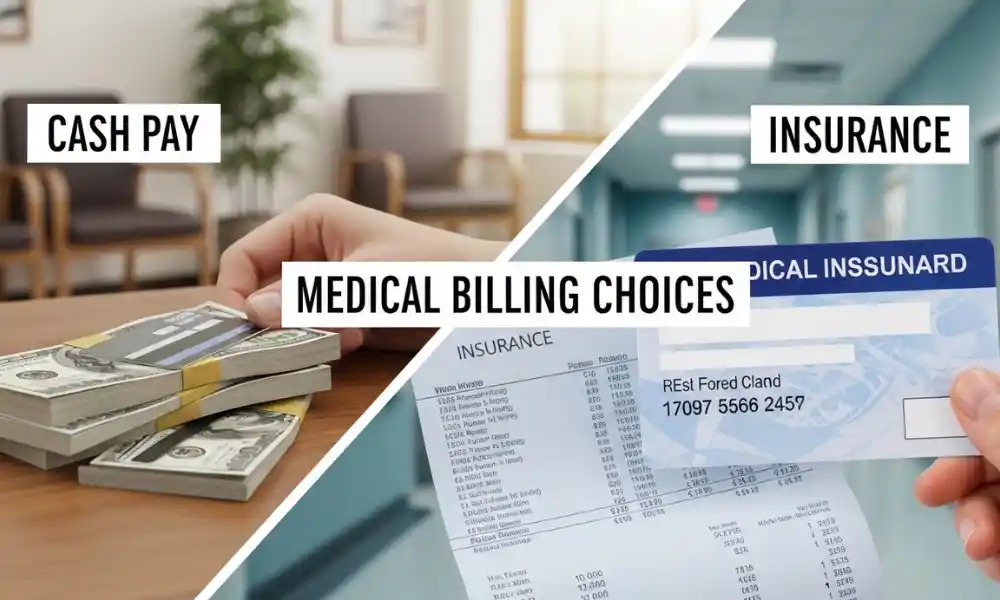
This article provides an in-depth comparison of Cash Pay vs Insurance for Medical Billing, explaining how each model works, their advantages and disadvantages, and how healthcare providers can choose the best approach for long-term financial stability.
Understanding Medical Billing Models
Medical billing refers to the process of translating healthcare services into billable claims and collecting payment from patients or insurance companies. There are two primary billing models used in the healthcare industry:
- Cash Pay (Self-Pay)
- Insurance-Based Billing
Each model impacts revenue, patient experience, administrative workload, and cash flow in very different ways.
What Is Cash Pay in Medical Billing?
Cash Pay, also known as self-pay, is a billing model where patients pay directly for medical services without involving insurance companies. Payment is usually collected at the time of service or shortly afterward.
This model is commonly used by:
- Private practices
- Concierge medical practices
- Mental health providers
- Physical therapy clinics
- Dental and cosmetic practices
- Direct primary care (DPC) providers
How Cash Pay Works
- Services are priced upfront
- Patients agree to costs before treatment
- Payment is collected via cash, card, or digital payment
- No insurance claims are submitted
What Is Insurance Billing?
Insurance billing involves submitting medical claims to insurance companies for reimbursement. The provider delivers care first and then bills the insurance payer based on contracted rates.
This model requires:
- Insurance verification
- Coding (CPT, ICD-10, HCPCS)
- Claim submission
- Denial management
- Follow-ups and appeals
Insurance billing is widely used by hospitals, large clinics, and practices that want to serve a broader patient base.
Cash Pay vs Insurance Billing: Core Differences
| Feature | Cash Pay | Insurance Billing |
|---|---|---|
| Payment Speed | Immediate | Delayed (30–90 days) |
| Administrative Work | Minimal | High |
| Claim Denials | None | Common |
| Revenue Predictability | High | Variable |
| Compliance Burden | Low | High |
| Patient Coverage | Limited | Broad |
Advantages of Cash Pay for Medical Billing
Faster Payments and Improved Cash Flow
One of the biggest benefits of cash pay is immediate revenue. Practices no longer need to wait weeks or months for insurance reimbursements.
Reduced Administrative Costs
Cash pay eliminates:
- Claim submissions
- Insurance follow-ups
- Denial appeals
- Prior authorizations
This significantly reduces staffing and billing software expenses.
Fewer Billing Errors
Without coding and claim processing, the risk of errors drops dramatically.
Transparent Pricing
Patients appreciate knowing costs upfront, which builds trust and reduces billing disputes.
Greater Provider Autonomy
Providers can:
- Set their own pricing
- Spend more time with patients
- Avoid insurance restrictions
Disadvantages of Cash Pay
Limited Patient Reach
Some patients rely heavily on insurance and may avoid cash-only practices.
Pricing Sensitivity
Out-of-pocket costs may discourage certain demographics.
Not Suitable for All Specialties
Emergency care, inpatient services, and high-cost treatments often require insurance coverage.
Advantages of Insurance Billing
Broader Patient Base
Accepting insurance allows practices to serve insured patients who may not afford cash pay services.
Higher Volume Potential
Insurance billing often supports higher patient volumes, especially in primary care and hospitals.
Familiar Payment Structure
Most patients are accustomed to using insurance and expect providers to accept it.
Challenges of Insurance-Based Medical Billing
Delayed Reimbursements
Payments can take 30, 60, or even 90 days, affecting cash flow.
Claim Denials and Rejections
Common reasons include:
- Coding errors
- Missing documentation
- Eligibility issues
- Authorization problems
High Administrative Burden
Insurance billing requires trained staff, billing software, and constant payer follow-ups.
Lower Reimbursement Rates
Insurance companies often reimburse less than the actual cost of care.
Which Is Better: Cash Pay or Insurance Billing?
There is no universal answer. The best choice depends on multiple factors:
- Practice size
- Specialty
- Location
- Patient demographics
- Financial goals
Cash Pay Works Best For:
- Small practices
- Mental health services
- Elective procedures
- Concierge medicine
- Practices focused on simplicity
Insurance Billing Works Best For:
- Large clinics
- Hospitals
- Primary care practices
- High patient volume settings
Hybrid Medical Billing Model: Best of Both Worlds
Many modern practices adopt a hybrid model, offering both cash pay and insurance billing options.
Benefits of a Hybrid Approach
- Flexibility for patients
- Improved cash flow from self-pay services
- Insurance coverage for complex care
- Reduced financial risk
Examples include:
- Cash pay for consultations
- Insurance billing for procedures
- Discounted self-pay packages
Impact on Revenue Cycle Management (RCM
Cash pay simplifies the revenue cycle:
- Shorter payment cycle
- Fewer touchpoints
- Lower AR days
Insurance billing requires a full RCM process:
- Eligibility verification
- Coding accuracy
- Denial management
- Payment posting
Practices should evaluate how each model affects their revenue cycle efficiency.
Patient Experience: Cash Pay vs Insurance
Cash Pay Experience
- Clear pricing
- Faster check-out
- No surprise bills
Insurance Experience
- Lower upfront cost
- Complex explanations of benefits
- Potential billing confusion
Patient satisfaction often depends on transparency and communication, regardless of the model.
Compliance and Legal Considerations
Insurance billing requires compliance with:
- HIPAA
- CMS regulations
- Payer contracts
- Coding guidelines
Cash pay has fewer regulatory requirements but still must comply with:
- Transparent billing laws
- Fair pricing practices
- Proper documentation
Common Questions About Cash Pay vs Insurance Billing
Is cash pay legal in medical billing?
Yes, as long as pricing is transparent and patients agree to self-pay terms.
Can a practice stop accepting insurance?
Yes, many practices transition to cash pay or hybrid models.
Does cash pay increase profits?
Often yes, due to lower overhead and faster payments.
Do patients prefer cash pay?
Some do, especially for predictable, elective, or wellness services.
Final Thoughts
Cash Pay and Insurance Billing each offer unique advantages and challenges. Cash pay provides simplicity, faster revenue, and lower administrative burden, while insurance billing allows access to a broader patient base and structured reimbursement.
For many practices, the most sustainable solution is a hybrid billing model that balances financial stability with patient accessibility. Understanding your practice’s goals, costs, and patient needs is key to choosing the right approach.