

Orthopedic medical billing and coding are some of the most complex and revenue-sensitive areas in healthcare. With hundreds of CPT and ICD-10 codes, intricate modifier rules, payer-specific requirements, and evolving CMS guidelines, orthopedic practices often struggle to get claims paid correctly the first time. A systematic approach and understanding of coding principles are essential to keep your revenue cycle moving smoothly, reduce denials, and optimize cash flow.
In this guide, we’ll break down key orthopedic coding essentials, best practices, common pitfalls, and actionable tips for billing professionals.
1. What is Orthopedic Medical Billing & Coding?
Orthopedic billing and coding translate clinical documentation from orthopedic procedures into standardized CPT (Current Procedural Terminology) and ICD-10 (International Classification of Diseases) codes submitted to payers.
CPT codes represent what was done (procedures/services), while ICD-10 codes explain why it was done (diagnosis). Accurate coding ensures claims are reimbursed and compliant with payer rules and CMS regulations.
2. Core Orthopedic CPT & ICD-10 Codes You Need to Know
While individual practices vary, here’s a high-level view of code categories commonly used in orthopedics:
CPT Code Categories
- Evaluation & Management (E/M): 99202–99499
- Surgery: 10021–69990 (arthroscopy, fracture repair, joint replacements, etc.)
- Radiology: 70010–79999
- Medicine/Injection Services: 90281–99199
Example Orthopedic CPT Codes
- 20610 – Arthrocentesis, aspiration, or injection of major joint
- 29827 – Arthroscopy, knee, with meniscectomy
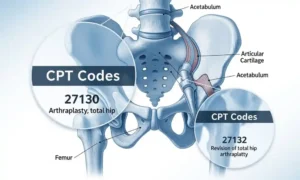
- 27130 – Total hip arthroplasty
- 29848 – Endoscopic carpal tunnel release
ICD-10 Coding Focus
Diagnosis codes must be specific, laterality-specific, and episode-appropriate (initial, subsequent, sequela). Lack of specificity is a frequent cause of denials.
3. Modifier Rules: When and Why They Matter
Modifiers tell payers how a service should be interpreted. Proper use prevents denials and ensures appropriate reimbursement.
Common Orthopedic Modifiers
- -RT / -LT — Right / Left anatomical side
- -50 — Bilateral procedure
- -59 — Distinct procedural service
- -25 — Significant, separately identifiable E/M service on the same day
- -76 / -77 — Repeat service by same / different provider
Modifiers must reflect documentation accurately — incorrect or missing modifiers often lead to denials or reduced payments.
4. Best Practices for Orthopedic Billing
4.1. Verify Insurance & Benefits Before Treatment
Always check eligibility, coverage, and prior authorization requirements. This prevents rejected claims due to coverage gaps or missing pre-auths.
4.2. Ensure Complete, Precise Documentation
Your coding is only as good as the documentation. Include laterality, operative details, implants used, techniques, and medical necessity. Lack of detail is a top denial driver.
4.3. Follow National Correct Coding Initiative (NCCI) Edits
NCCI edits define how certain CPT codes can or cannot be billed together — understanding bundling/ unbundling is key to rejection reduction.
4.4. Stay Current With Annual Code Updates
CPT and ICD-10 codes are updated yearly (effective October 1) and sometimes quarterly. Outdated codes lead to denials or underpayments.
4.5. Train Your Team Continuously
Billing trends, rules, and payer policies evolve constantly. Regular training ensures your staff catches changes before they impact revenue.
5. Common Coding Errors to Avoid
Orthopedic practices share many frequent billing mistakes. Watch out for:
- Missing laterality or seventh-character information in ICD-10.
- Mismatched diagnosis and procedure codes that don’t justify the service billed.
- Incorrect modifier usage (especially -59 or laterality).
- Ignoring global surgical periods and follow-up visits resulting in invalid billing.
6. How to Handle Denials & Appeals
Even the best teams will face denials. Effective remedies include:
- Evaluate the denial reason code (e.g., missing documentation, incorrect modifiers)
- Fix the claim and resubmit with supporting documentation
- Use denial trends to educate coders and adjust workflows
Denials are learning points — track patterns and address root causes.
7. Technology & Tools That Boost Accuracy
Today’s orthopedic coders use:
- EHR-integrated coding assistants with AI suggestions
- Automated edit checks for NCCI and payer rules
- Real-time alerts for missing documentation or laterality
These tools reduce manual errors and accelerate turnaround times.
Frequently Asked Questions (FAQs) About Orthopedic Billing & Coding
1. What makes orthopedic billing more complex than other specialties?
Orthopedic billing is complex because it involves surgical procedures, fracture care, joint replacements, arthroscopy, injections, imaging, and strict modifier usage. Laterality, global surgical periods, and detailed documentation requirements make accurate coding critical to avoid denials.
2. What are the most commonly used CPT codes in orthopedic practices?
Some frequently used orthopedic CPT codes include:
- 20610 – Major joint injection
- 29881 – Knee arthroscopy with meniscectomy
- 27130 – Total hip arthroplasty
- 29827 – Shoulder arthroscopy with rotator cuff repair
However, the correct code depends entirely on documentation and procedure details.
3. Why is laterality important in orthopedic ICD-10 coding?
Orthopedic ICD-10 codes require specific laterality (right, left, bilateral). Missing laterality or the seventh character (initial, subsequent, sequela) is one of the top reasons for claim denials in orthopedic billing.
4. What modifiers are commonly used in orthopedic billing?
Common modifiers include:
- -RT / -LT (Right or Left side)
- -50 (Bilateral procedure)
- -59 (Distinct procedural service)
- -25 (Separate E/M service on same day)
Incorrect modifier usage can lead to reduced reimbursement or rejected claims.
5. What is the global period in orthopedic surgery
The global period is a timeframe after a surgical procedure during which related follow-up care is included in the original payment. Billing separately during the global period without proper modifier usage can result in denials.
6. How can orthopedic practices reduce claim denials?
Practices can reduce denials by:
- Verifying insurance eligibility and authorization
- Ensuring complete operative documentation
- Using updated CPT and ICD-10 codes
- Following NCCI edits
- Conducting regular coding audits
7. What documentation is required for orthopedic claims?
Documentation should include:
- Detailed operative notes
- Laterality
- Implants used
- Fracture type and location
- Medical necessity
- Pre- and post-operative findings
Incomplete documentation directly impacts reimbursement.
8. How often are orthopedic CPT and ICD-10 codes updated?
ICD-10 codes are updated annually on October 1. CPT codes are updated every January. Staying updated is essential to maintain compliance and avoid claim rejections.
9. What is the biggest revenue loss area in orthopedic billing?
The most common revenue leakage occurs due to incorrect modifier use, undercoding surgical procedures, missing prior authorizations, and failure to track denied or underpaid claims.
10. Should orthopedic practices outsource billing services?
Outsourcing orthopedic billing can help reduce errors, improve collections, and ensure compliance, especially for high-volume surgical practices. However, success depends on choosing an experienced billing partner with orthopedic expertise.
Conclusion
Orthopedic billing and coding demand precision, updated knowledge, and consistent documentation. By following best practices, understanding modifiers, verifying coverage, and training your team, you will reduce denials and improve collections.